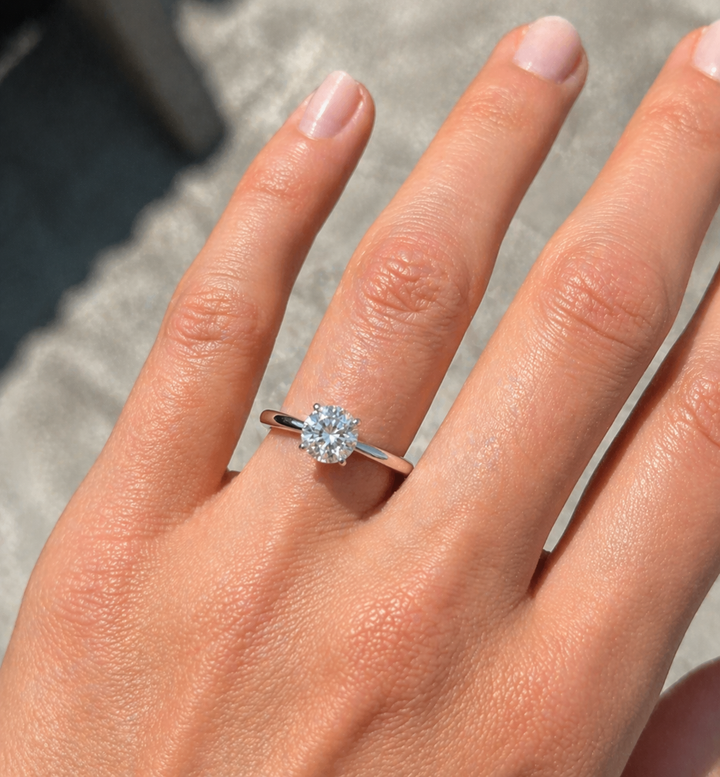
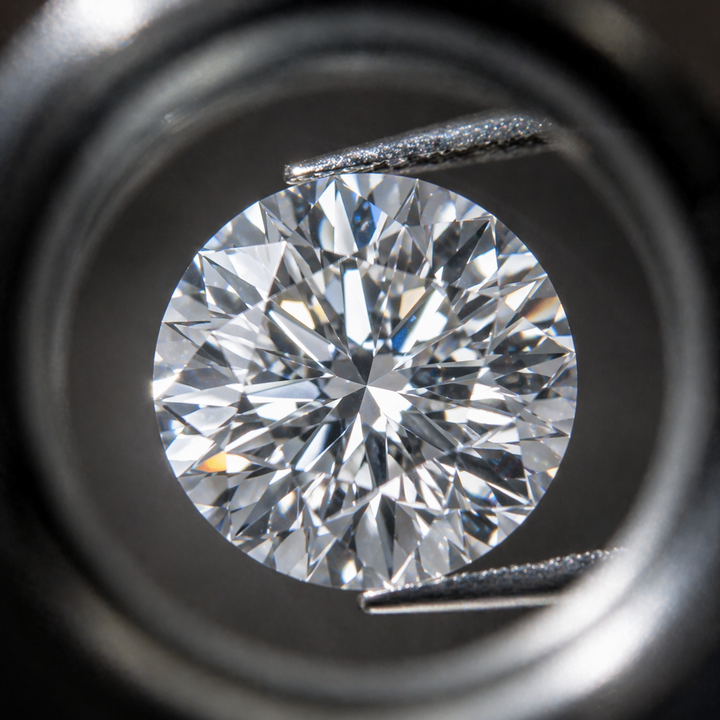
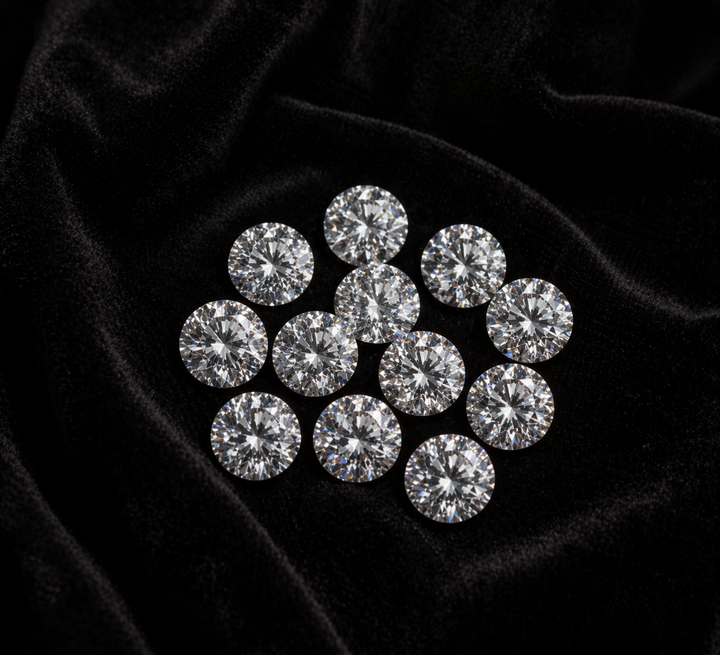
Yes, lab grown diamonds are real diamonds. A lab grown diamond has the same carbon crystal structure, the same Mohs 10 hardness and the same optical brilliance as a diamond formed in the earth. The only difference is origin, not quality. A jeweller's diamond tester reads a lab grown stone as a diamond because chemically and physically it is one. Both IGI and GIA, the two leading gem laboratories, certify lab grown diamonds using the same four Cs grading they apply to mined stones. The distinction that matters to a buyer is not real versus fake. It is grown versus mined, which is a question of price, environmental footprint and supply chain rather than quality. This guide covers everything you need to know before buying a lab grown diamond in the UK.
This guide was written by Asher Wiener, co-founder of Luma Jewellery in Hatton Garden, London. Last updated 27 May 2026.

What makes a diamond a diamond
A diamond is carbon arranged in a specific cubic crystal lattice, the hardest natural arrangement of atoms known. That structure is what gives a diamond its hardness, rated 10 on the Mohs scale, and the optical properties that produce its fire and brilliance. The lattice does not care where the carbon came from. If the atoms are arranged in this specific cubic structure, the material is a diamond.
A lab grown stone has that exact same structure. A mined stone has that exact same structure. Cubic zirconia, moissanite and white sapphire, by contrast, are completely different materials. A basic diamond tester flags them within seconds because their thermal and electrical properties are different. Lab grown diamonds pass every diamond test because they are diamonds.
How lab grown diamonds are made
Two methods are used to grow diamonds today, both producing chemically identical results.
HPHT (High Pressure High Temperature)
HPHT places a small diamond seed in a press chamber alongside a carbon source, then applies pressure of around 1.5 million pounds per square inch and temperatures over 1,400 degrees Celsius. The carbon melts and crystallises around the seed, growing a new diamond layer by layer. HPHT mimics the conditions deep underground where natural diamonds form, just on a faster timescale of days to weeks rather than millions of years.
CVD (Chemical Vapour Deposition)
CVD places a diamond seed in a vacuum chamber filled with carbon rich gas, usually methane. The gas is heated until carbon atoms separate and settle onto the seed, growing the diamond one atomic layer at a time. CVD operates at lower temperatures and pressures than HPHT, and produces diamonds that often need finishing in HPHT to bring out their final colour.
Either method produces a single diamond crystal, ready to be cut, polished and graded like any other diamond. Most lab grown diamonds sold in the UK in 2026 are CVD grown.
How lab grown diamonds are tested and certified
Lab grown diamonds are graded by the same independent gem laboratories that grade natural diamonds. The most common are IGI (International Gemological Institute) and GIA (Gemological Institute of America). Both grade lab grown stones on the same four Cs: cut, colour, clarity and carat weight. The certificate states clearly that the stone is lab grown, including a unique inscription number on the diamond's girdle that you can read with a loupe.
For most lab grown diamonds in the UK, IGI is the standard. Every diamond sold by Luma's engagement ring collection comes with its IGI certificate, which we share before you commit to the stone.
A jeweller cannot tell a lab grown diamond from a mined one with the naked eye, a loupe, or a standard handheld diamond tester. Specialist laboratory equipment (such as a DiamondView or Sherlock Holmes spectroscope) is needed to detect the subtle differences in how the crystal grew. These differences include patterns of inclusions, fluorescence under UV light, and trace nitrogen content. For a customer holding the stone, the difference is invisible.

Lab grown vs mined diamonds: the key differences
The differences between lab grown and mined diamonds are not in the diamond itself, but in everything surrounding it.
| Factor | Lab grown | Mined |
|---|---|---|
| Chemical composition | Pure carbon, cubic lattice | Pure carbon, cubic lattice |
| Hardness (Mohs) | 10 | 10 |
| Optical brilliance | Identical | Identical |
| Time to form | Days to weeks | Billions of years |
| Typical price for 1ct G VS1 | Roughly 1,500 to 3,000 pounds | Roughly 6,000 to 10,000 pounds |
| Supply chain length | 2 to 3 parties | 5 to 7 parties |
| Certification | IGI, GIA (clearly labelled lab grown) | IGI, GIA, others |
| Resale value | Limited | Limited (for most retail diamonds) |
For more on how the two compare for engagement rings, see our guide to lab grown vs natural diamonds.
Common misconceptions about lab grown diamonds
"They are fake diamonds." False. A fake diamond is something that looks like a diamond but is not (cubic zirconia, glass, moissanite). A lab grown diamond is diamond, just grown in a controlled environment.
"They scratch easier than mined diamonds." False. Both are Mohs 10, the hardest natural material. Neither scratches in normal wear.
"They lose their sparkle over time." False. A diamond is a stable carbon lattice. Sparkle does not change with age. What changes is dirt and skin oil on the surface, which a clean with warm soapy water restores.
"They are not certified." False. Every Luma lab grown diamond is IGI certified. Major lab grown stones are graded on the same standards as mined.
"They are worth nothing." Misleading. Resale value is limited for most diamonds (lab grown and mined), because retail mark-up is built into the original price. Buy a diamond to wear it, not as an investment.
How much do lab grown diamonds cost in the UK?
Lab grown diamonds typically cost 50 to 70 percent less than a mined diamond of equivalent size, cut, colour and clarity. A 1 carat G colour VS1 clarity round brilliant lab grown stone sells in the UK in 2026 for between 1,500 and 3,000 pounds, depending on cut quality. The same stone mined would cost 6,000 to 10,000 pounds.
For a complete budget guide, see our explainer on how much to spend on an engagement ring in the UK and why lab grown diamonds are cheaper.
Where Luma fits in
At our Hatton Garden studio we specialise in lab grown diamond engagement rings, bespoke pieces and fine jewellery. Every diamond is IGI certified. Every piece is UK hallmarked at the London Assay Office. Our engagement ring collection is fully customisable: choose your diamond shape, carat weight, metal and setting, and the price updates as you go.
If you want to talk through a specific stone or design, our team works one to one with every client. Book a studio consultation at 13 Hatton Place, London.
Frequently asked questions
Can a jeweller tell the difference between a lab grown and a mined diamond?
Not by eye, not with a loupe, and not with a standard diamond tester. Both read as diamond because both are diamond. Telling them apart needs specialist equipment in a gem laboratory, which detects trace differences in how the crystal grew.
Are lab grown diamonds cheaper than mined diamonds?
Yes, usually 50 to 70 percent cheaper for an equivalent stone. The supply chain is shorter and more efficient. The diamond itself is not lower quality.
Do lab grown diamonds hold their value?
Not in the resale sense, and the same is true of most natural diamonds. Once a diamond is bought at retail, reselling it privately usually returns a fraction of the purchase price. Buy a lab grown diamond to wear it, not to resell it.
Are lab grown diamonds ethical?
The supply chain for lab grown diamonds is shorter and more traceable than mined diamonds. There is no mining, so no risk of conflict sourcing. Energy use varies by facility, with some growers using renewable power and others using grid electricity. We cover this in detail in our guide to lab grown ethics.
Do lab grown diamonds test as real diamonds?
Yes. A standard handheld diamond tester registers a lab grown stone as diamond, because it is chemically and physically diamond.
Are lab grown diamonds graded the same way as mined?
Yes. IGI and GIA grade lab grown stones on the same four Cs (cut, colour, clarity, carat) with the same scale. The certificate clearly states lab grown.
What is the difference between lab grown and synthetic diamond?
They are the same thing. "Synthetic diamond" is the older industry term, "lab grown" is the consumer friendly term. Both refer to a real diamond grown in a controlled facility.
What is the difference between lab grown and cubic zirconia or moissanite?
Cubic zirconia and moissanite are diamond simulants, not diamonds. They are different materials with different chemistry, different hardness and different optical properties. A diamond tester flags them immediately. Lab grown diamonds are real diamond.
How long do lab grown diamonds last?
Forever, in practical terms. Diamond is the hardest natural material on Earth, Mohs 10. It does not degrade, fade or wear out with normal wear. Both lab grown and mined diamonds last for generations.
Have a question we have not answered? Email us at info@lumajewellery.com or book a studio visit.