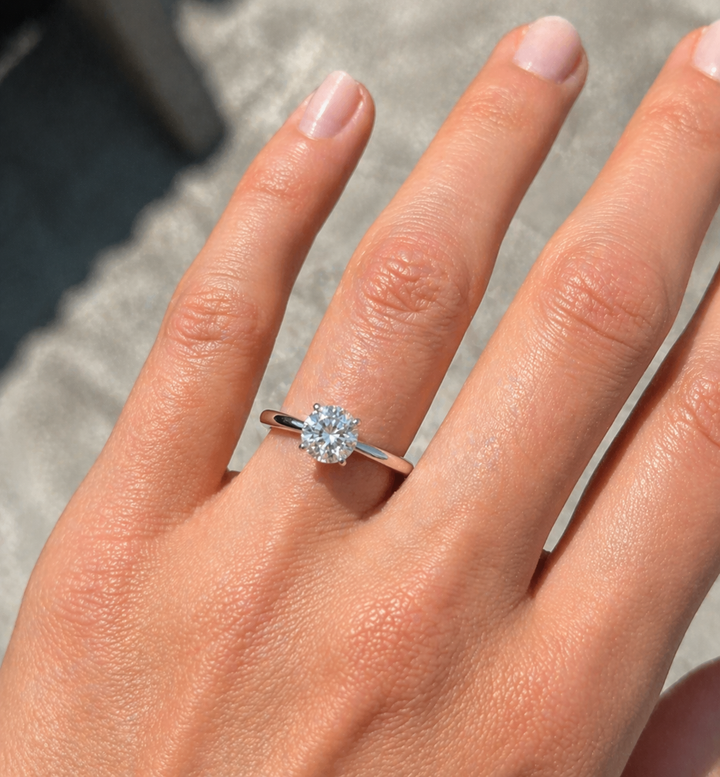
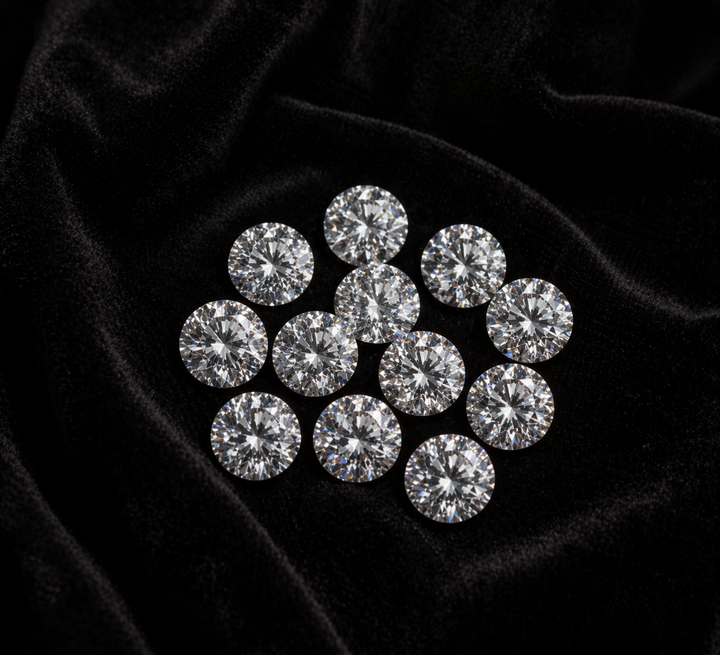
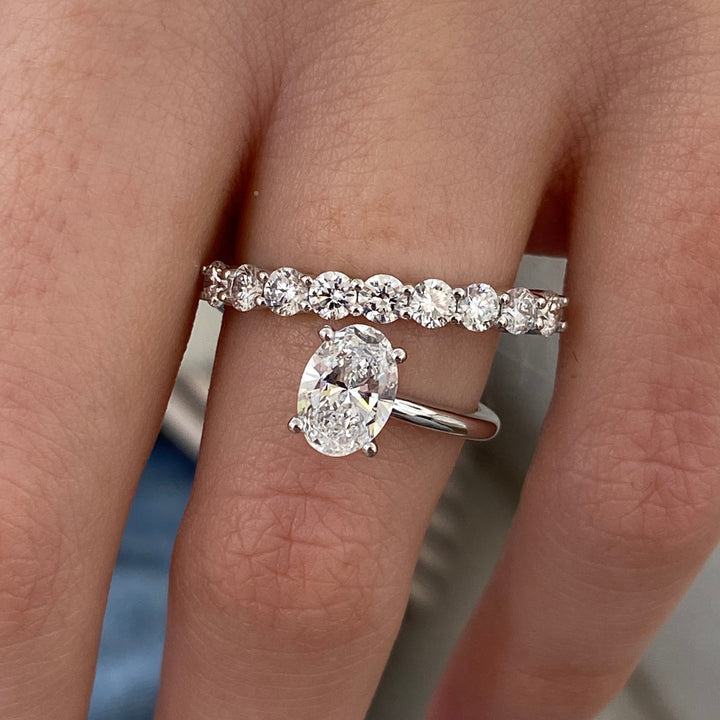
Both are real diamonds with identical chemical and physical properties. The only true difference is how they formed. A natural diamond formed in the earth over billions of years and was mined. A lab grown diamond formed in a few weeks in a lab that recreates the same heat and pressure that creates a diamond underground. Side by side, an expert cannot tell them apart without specialist equipment, and a standard diamond tester reads both as diamond. They are graded by the same laboratories on the same scale for colour, clarity, cut and carat. The differences that matter to a buyer are price, where a lab grown stone typically costs far less for the same size and quality, environmental footprint, and certainty about where the stone came from. Choosing between them is a question of values and budget, not of quality or authenticity.
Luma's engagement ring collection uses only lab grown diamonds, each IGI certified and priced direct from our Hatton Garden studio.

What is the same
Chemically, physically and optically a lab grown diamond and a natural diamond are identical. Same carbon crystal structure. Same hardness, ten on the Mohs scale. Same brilliance, fire and scintillation. Same grading laboratories, same four Cs, same certification process. A diamond tester reads both as diamond because both are diamond.
What is different
Origin and price. A natural diamond formed deep in the earth over a geological time scale and was mined to be brought to market. A lab grown diamond formed in a controlled facility over a few weeks. That difference in supply chain, not in the diamond itself, is what closes the price gap. Lab grown diamonds typically cost a half to a third of the price of a mined stone of the same specification.
What this means for a buyer
If you value the geological origin of a stone formed naturally in the earth, that is a real reason to choose a mined diamond. If you want the same size and quality of diamond for less, with full traceability from the lab onwards, lab grown is the cleaner answer. Both are real, both are certified, both will last a lifetime. It is a question of values and budget, not quality.
Related questions
How can a jeweller tell a lab grown diamond from a natural one?
Not by eye and not with a standard diamond tester. Both test as diamond because both are diamond. The only reliable way to identify origin is in a gem laboratory using specialist equipment that detects trace differences in how the crystal grew.
Is a lab grown diamond worth less because it is grown not mined?
No. The lower price reflects a shorter and more efficient supply chain, not lower quality. The diamond itself is the same material, with the same hardness, the same sparkle and the same certification.
Are lab grown diamonds ethical?
They remove the sourcing concerns tied to mining. No land is disturbed and the origin is documented from the start. Energy use varies by producer, but the supply chain is short and traceable.