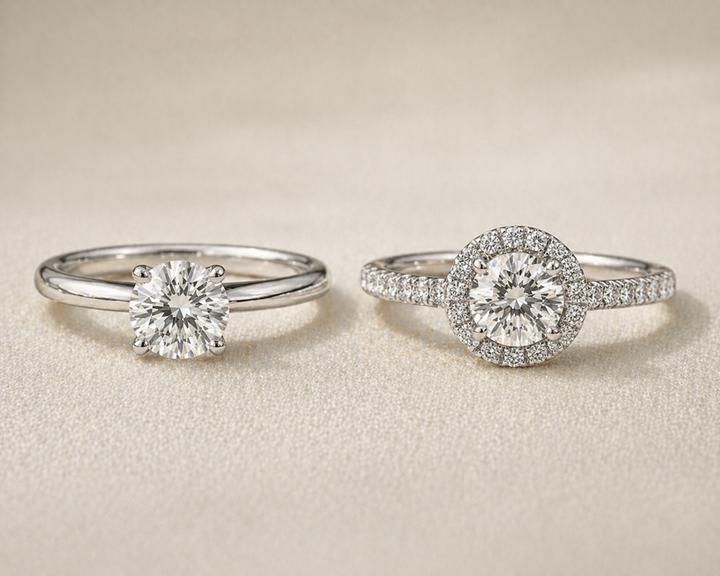
There is no correct answer, only the right size for the wearer's hand and your budget. In the UK, the average centre stone is around 1 carat to 1.5 carats. Smaller hands can look balanced with a 0.5 to 0.75 carat stone, while longer fingers can carry 1.5 to 2 carats easily. Cut quality matters more than carat weight for actual sparkle. A well cut 0.9 carat diamond often looks brighter and larger than a poorly cut 1.1 carat one, because cut determines how light moves through the stone. With a lab grown diamond, you can move up a carat size for the same budget as a mined equivalent, so it is worth considering what size she actually wants to wear rather than what your budget would have allowed in mined. The right diamond is the one she is happy to look at every day.
Configure your ring on any product in our engagement ring collection to see how different carat sizes look and price.

Cut matters more than carat
Two diamonds of identical carat can look meaningfully different. A 1 carat round with excellent cut, polish and symmetry will outshine a 1.2 carat round with poor cut. Lab or mined, cut is what determines how much light returns to the eye. Prioritise cut grade, then carat, then colour and clarity.
How carat size reads on the hand
A 1 carat round measures roughly 6.5mm across the table. A 1.5 carat measures about 7.4mm, a 2 carat about 8.1mm. Each step up looks slightly more impressive but not as much as the price difference suggests. The 0.9 to 1.2 carat band is the sweet spot for visual impact relative to budget.
Related questions
What is the most common engagement ring carat size in the UK?
Around 1 carat is the most common UK centre stone size. 1.5 carats has grown in popularity as lab grown has made larger stones affordable.
Is bigger always better?
No. A diamond that overwhelms the wearer's hand or feels uncomfortable for daily wear is not the right choice regardless of size. Match the stone to the finger and to her style.
Can you upgrade the centre stone later?
In many cases yes. A solitaire or four prong setting can be reset around a larger stone in the future. Worth asking before you choose if you think upgrading might appeal later.