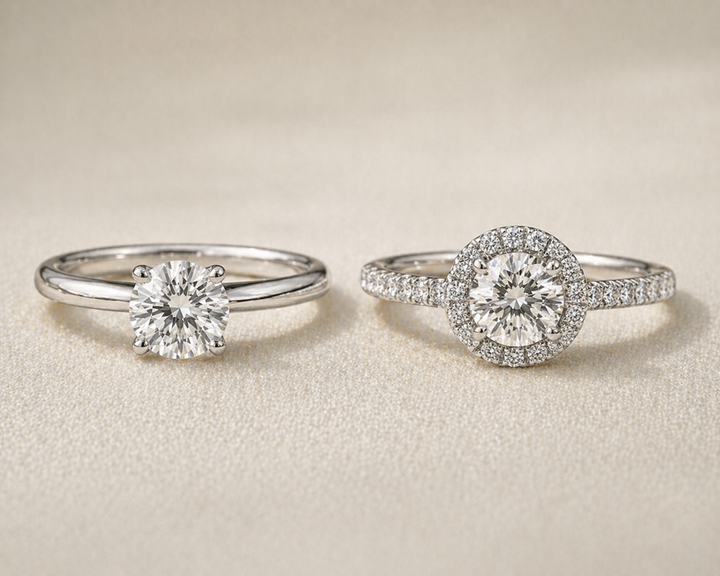
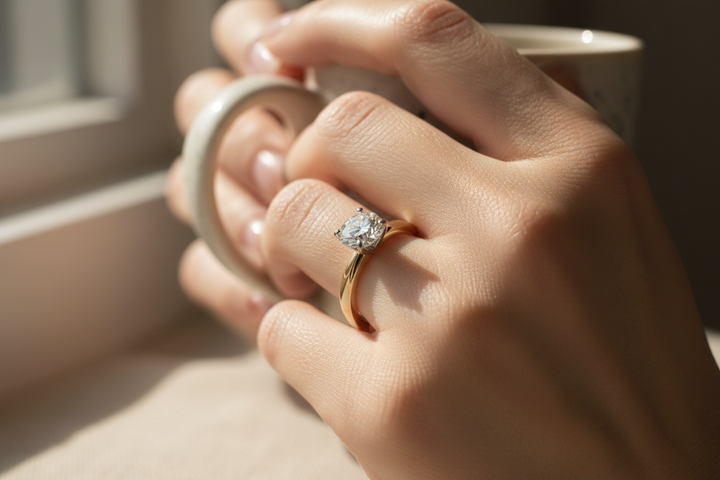
Yes. A standard diamond tester, the handheld tool a jeweller uses, measures how a stone conducts heat. A lab grown diamond conducts heat exactly like a mined diamond, because it is the same carbon crystal, so it reads as diamond every time. This is different from a simulant such as cubic zirconia or moissanite, which a tester can flag as not diamond. Telling a lab grown diamond apart from a natural one is a separate question, and it cannot be done with a basic tester or by eye. It needs specialist equipment in a gem laboratory, which detects tiny differences in how the crystal grew. For everyday purposes, a lab grown diamond is a diamond and tests as one. If you ever need proof of which type you own, the certificate from IGI or GIA states it clearly.
Every lab grown diamond in Luma's engagement ring collection comes with an IGI certificate that names it as lab grown.

How a diamond tester actually works
The handheld tester a jeweller uses is a thermal conductivity probe. It touches the surface of a stone and measures how quickly heat moves through it. Diamond conducts heat very efficiently, more than almost any other gem material. Both lab grown and mined diamonds give the same reading because they are the same material.
What it can and cannot tell you
A standard tester confirms that a stone is diamond, full stop. It cannot tell you whether that diamond grew in the earth or in a lab. For that you need specialist gemological equipment that reads trace element patterns and growth characteristics, or you check the laboratory certificate.
Simulants vs diamonds
A simulant like cubic zirconia or moissanite looks similar to a diamond at a glance but is a different material. A basic tester will flag moissanite as not diamond and cubic zirconia as not diamond. If a stone reads as diamond on a tester, it is a diamond, lab grown or mined.
Related questions
Can I take my lab grown diamond to any jeweller for testing?
Yes. Any jeweller with a diamond tester can confirm it is diamond. If you also want confirmation of origin, ask a gem laboratory or check the IGI or GIA certificate.
Does a lab grown diamond fluoresce under UV?
Some do, some do not, just like natural diamonds. Fluorescence is a property of the individual stone and is noted on the laboratory certificate.
What if a tester says my diamond is not diamond?
That is a sign the stone is a simulant rather than a diamond. Take it to a reputable gemologist for a second opinion before drawing conclusions.